


Everything about rugby rules: The complete guide from beginner to professional
Introduction to Rugby
Rugby, a sport that is both dynamic and physical, captivates millions of fans worldwide. Originating in England, this iconic game has successfully conquered countries like New Zealand, South Africa, and Australia, where it has become a true institution. Combining strategy, speed, and teamwork, it is not just a game but also embodies values such as solidarity and respect. In this article, we invite you to delve into the fascinating world of rugby: its rich history, the fundamental principles of the game, and the reasons for its growing global popularity. Whether you are a curious beginner or a seasoned enthusiast, prepare to discover a sport that continues to inspire and unite generations.
Playing field and equipment
Rugby is played on a special pitch measuring 100 meters long and 69 meters wide, with two 22-meter in-goal areas at either end. The goalposts, essential to the game, are located at the ends of the field, spaced 5.67 meters apart, and the crossbar is 3 meters high, making it a target for kicks.
Regarding equipment, rugby players take a lighter approach than in other contact sports like American football. Mandatory equipment includes a mouthguard, jersey, shorts, and rugby boots. It's also important to note that scrum caps are permitted in rugby. These differ significantly from American football helmets. They are made of foam and primarily serve to protect players' ears during scrums in the contact phases.
This philosophy of minimizing heavy protective gear promotes players' physical fitness and resilience, allowing for a more fluid style of play and better interaction on the field. Therefore, rugby is not just about physical confrontations; It also requires excellent physical and mental preparation to meet the challenges of the game.
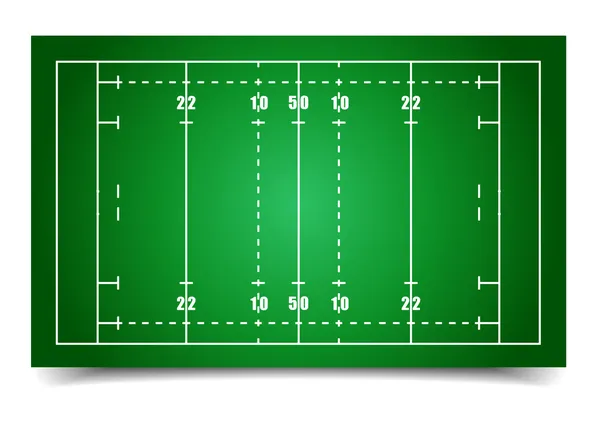
Basic rules of the game (use of keywords)
In rugby, fundamental rugby rules dictate the flow of the game and ensure its smooth operation. Players can run with the ball, but they must adhere to certain essential rugby rules. For example, they may only pass the ball backward, which promotes strategic and collective play. Regarding kicking, players can kick the ball forward, but this kick must be executed carefully to avoid losing possession.
The tackling rules are also crucial: a player may only tackle the ball carrier, ensuring the safety of the other players. This necessitates a tactical approach during the phases of the game, as players must anticipate their opponents' movements.
Tackling is a sequence of movements involving varying degrees of physical contact, which is why certain rules must be followed to guarantee player safety. Tackles above the shoulder or tackling a player in the air are strictly prohibited.
Furthermore, there is a strict offside rule: players must remain behind the ball at all times during play, or they risk a penalty. These rules, though simple, form the basis for a game that combines skill, strategy and teamwork, making each game exciting and full of twists and turns.
Game flow and scoring
The course of a rugby match is determined by the scoring of points, which plays a crucial role in the outcome of the game. It's important to understand that rugby is a game of gaining ground. The objective is to place the ball into the opponent's in-goal zone by passing it exclusively backwards. Only forward kicks are permitted.
Teams can score points in various ways, with each action having its own point value. The most rewarding way to score is a try, which is worth 5 points. To score a try, a player must place the ball into the opponent's in-goal zone, a moment that is often spectacular and thrills the fans.
After a try, the team has the opportunity to convert these points through a conversion. This means kicking the ball through the goalposts, which is worth 2 additional points if the try is successful.
If the opposing team commits a foul, a penalty kick may be awarded, which is worth 3 points if the ball is kicked directly at the goalposts.
Finally, the drop kick, which can be performed during open play, also awards 3 points. This kick requires the ball to bounce before being kicked, adding an extra layer of challenge and strategy to the game. Thus, the variety of scoring opportunities makes rugby not only dynamic but also exciting, with high stakes at every stage of the game.
Player positions and their roles
Rugby is a sport in which each player has a specific role that contributes to the team's overall strategy. The players are divided into two main categories: forwards and backs.
The strikers
Props (Pillars): These players are positioned at both ends of the front row in the scrum and are crucial for the team's stability and strength. They provide a solid foundation in the scrums and must also excel in tackling and ball support during the game phases.
Hooker: The hooker is positioned in the middle of the front row in the scrum and is responsible for ball possession during scrums and lineouts. They also play a key role in dynamic game situations, both offensively and defensively.
Locks (Second Row): The locks are tall, powerful players who line up behind the props in the scrum. They are responsible for jumping in the lineouts and provide the necessary strength during the game phases. Their role is crucial for winning back possession.
Flankers (wingers): Flankers position themselves on the sides of the scrum and are versatile players who combine both strength and speed. They are often the first to make tackles and win the ball back, and play a key role in supporting the forwards.
Number 8: The number 8 plays behind the scrum and is a key player who connects the forwards and the back line. He is involved in receiving the ball and can also contribute to both attack and defense, giving the team great flexibility.
The back line
Scrum-Half: This player acts as a link between the forwards and the back line. He is responsible for quickly distributing the ball after a scrum or ruck and must have good vision and excellent decision-making skills.
Fly-half (playmaker): Often considered the team's strategist, the fly-half makes crucial tactical decisions and is responsible for strategic kicks. He is also involved in creating scoring opportunities.
Centers (Midfielders): The center lineup consists of an inside and a outside center and is responsible for breaking through the opposing defense and creating scoring opportunities. They must be fast and strong enough to carry the ball while also defending effectively.
Wings: These players position themselves on the edges of the field and are often the fastest players on the team. Their primary role is to finish attacks and score tries by using their speed to outpace the opposing defense.
Fullback (defender): The fullback is a versatile player and often the last line of defense. He must be able to secure the ball on opposing kicks and initiate counterattacks. His court vision and tackling skills are crucial.
Every player, whether forward or back, plays a crucial role in the team strategy, and their synergy is what makes rugby so powerful. By working together, players can create dynamic movements, defend effectively, and maximize their chances of success on the field.

Offenses and sanctions
Although rugby is dynamic and physical, the game is governed by a set of rugby rules designed to ensure player safety and fair play. Rugby is regulated by numerous rules that affect every aspect of the sport; a complete rulebook would be needed to describe them all in detail. Therefore, here we focus on the most common infringements, which include various types of fouls, each with different consequences.
Tackles and Fouls:
Among the most common violations is the high tackle, where a player attacks their opponent above the shoulder line. This type of tackle is strictly penalized to protect player safety. Obstruction is another common foul, occurring when players intentionally block an opponent's path without attempting to gain possession of the ball. Finally, playing the ball on the ground, i.e., attempting to win the ball while on the ground, is also prohibited. These violations can result in penalty kicks, which allow the opposing team to resume play.
Sanctions and Cards:
Sanctions in rugby vary depending on the severity of the offense. Yellow cards are used for less serious fouls and result in a temporary suspension of the player, usually for 10 minutes. This means the team plays with one less player during this time. Red cards, on the other hand, are issued for serious offenses, such as violent conduct or dangerous tackles, and result in the immediate ejection of the player from the game. An ejected player cannot be replaced, which significantly weakens the team.
Scrum and Throw-in:
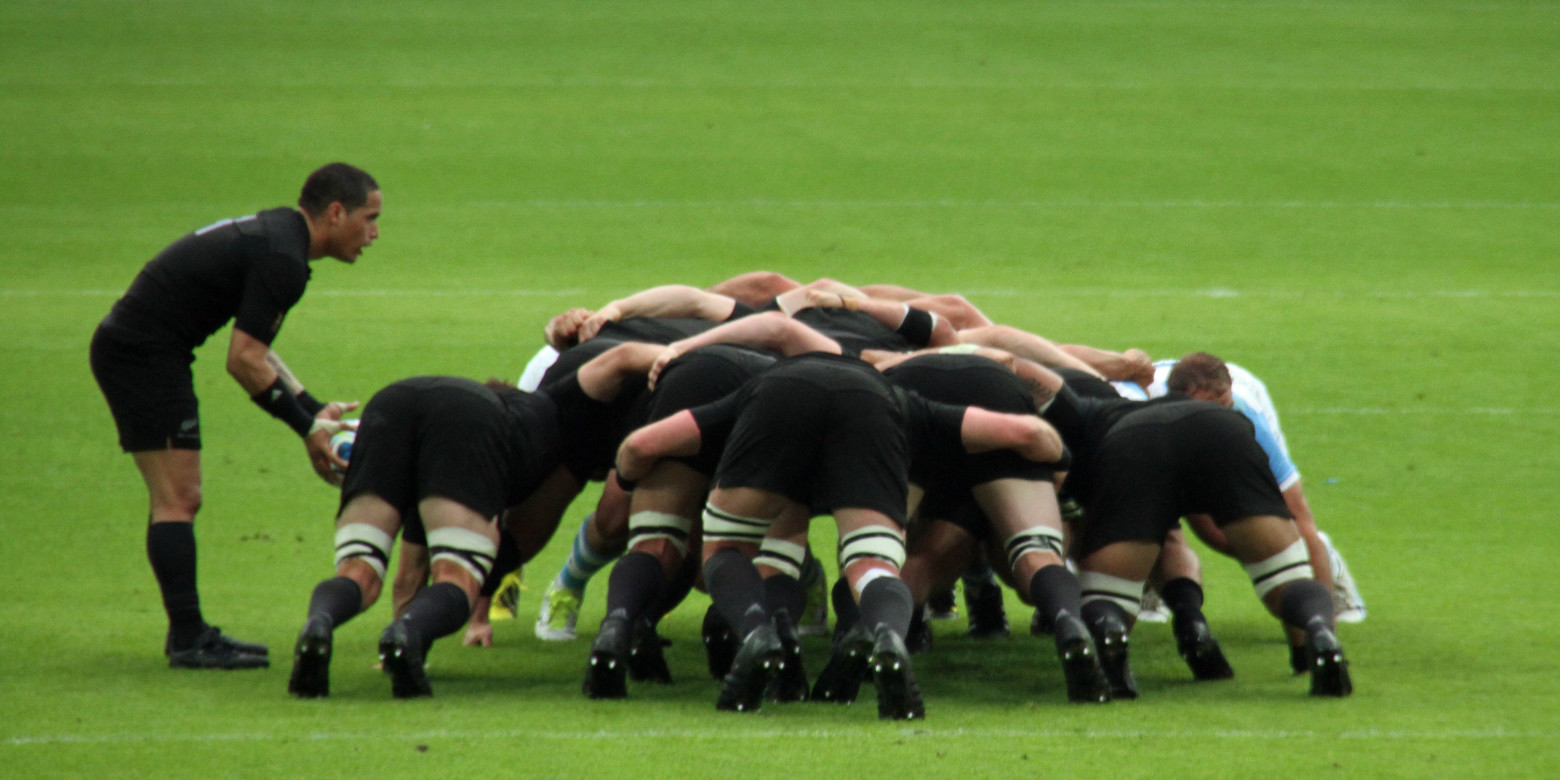
After a minor infringement, a scrum is usually initiated. This occurs when play is stopped due to a minor foul or unexpected contact, and players from both teams group together to compete for possession of the ball. The scrum is a crucial phase of the game, testing both skill and physical strength. When the ball goes out of play, a throw-in is taken. The ball is put back into play by the team that last did not touch it, and players must form a line to win possession upon this reintroduction. These rules are essential for maintaining the flow of the game and ensuring the safety and integrity of rugby.
Different rugby variations
Rugby comes in several variations, each with its own characteristics and rules, which contributes to the diversity and appeal of this sport.
Rugby Union vs. Rugby League
Rugby Union and Rugby League are two popular forms of rugby, but they differ significantly. In Rugby Union, each team consists of 15 players, while Rugby League has only 13 players per team. These differences are also reflected in the playing style: Rugby Union emphasizes scrums and rucks, while Rugby League favors a faster-paced game with fewer scrums. Regarding scoring, a try in Rugby Union is worth 5 points, a conversion 2 points, and a penalty kick or drop kick 3 points. In Rugby League, however, a try is worth 4 points, a conversion 2 points, and a penalty kick 2 points, which alters the strategic dynamics of the game.
Rugby Sevens
Rugby Sevens is a faster and more dynamic version of rugby played with only seven players per team. This version attracts worldwide attention, particularly at the Olympic Games. Rugby Sevens matches are short, usually consisting of two seven-minute halves, which makes the game intense and challenges the players' speed, agility, and stamina. Teams must move quickly across the pitch and make split-second decisions, making every match exciting and thrilling.
Touch Rugby
Touch Rugby is a non-contact version of the game that is gaining popularity, particularly in schools and community leagues. In this version, players do not tackle their opponents; instead, they touch the ball carrier to stop play. This makes Touch Rugby accessible to a wide range of participants, regardless of their experience or fitness level. The rules of rugby are simplified, allowing players to focus on passing and movement skills while enjoying the team spirit and competitive aspect without the risk of intense physical contact. This version is ideal for promoting rugby among young people and in recreational settings, while also instilling the fundamental values of respect and camaraderie that define the sport.
Each of these rugby variants offers a unique experience while sharing the basic principles that unite all fans of this flagship sport.

Points and goals in rugby
In rugby, the scoring system is crucial for determining the winner of a match and outlines the objectives each team strives to achieve. Players must work together strategically to score points using various methods: tries, conversions, and penalty kicks. A try, in which the ball is grounded in the opponent's in-goal area, is worth 5 points and is one of the primary objectives for teams. After scoring a try, a team has the opportunity to score additional points through a conversion, in which the ball must be kicked between the goalposts, adding 2 more points. Additionally, penalty kicks can be awarded after a foul, allowing the team to score 3 points by aiming directly at the goalposts.
To be successful, teams must develop offensive strategies that maximize their chances of scoring while simultaneously implementing solid defensive strategies to prevent the opponent from doing the same. Coordination and communication between players are crucial, as they create attacking opportunities while ensuring an effective defense. Rugby is thus a sport where team spirit, tactics, and physical exertion converge, making every match exciting and unpredictable. Beyond the mere score, the ultimate goal remains playing as a team and demonstrating fair play, embodying the values that have made this sport famous worldwide.
Summary and tips for beginners
Rugby is a dynamic and strategic sport, but understanding some basic rules and techniques is essential to fully enjoy the game. Among the fundamental rugby rules, the offside rule is crucial: players must always be behind the ball, otherwise a penalty is incurred. Proper tackling techniques must also be mastered to ensure player safety and maintain the integrity of the game. Furthermore, precise passes and effective kicks are fundamental for advancing on the field and creating scoring opportunities.
Here are some practical tips for beginners:
- Understanding the rules: Familiarize yourself with the basic rugby rules, especially common fouls and their associated penalties.
- Learn tackling techniques: Practice tackling while observing safety guidelines, focusing on lower tackles and avoiding high contacts.
- Master passes and kicks: Practice passing both forwards and backwards, and improve your kicks to increase your accuracy.
To get involved in rugby, it's recommended to join a local rugby club or school team. This will not only allow you to benefit from qualified coaching, but also to meet other enthusiasts and integrate into the rugby community. Training sessions and matches will help you progress, develop fundamental skills, and deepen your understanding of the game.
Here you will find our selection of equipment:
Aerobic and anaerobic training
Comprehensive guide to the badminton rules: From the basics to professional play
Related Posts

How to improve your shooting in basketball

Volleyball Rules

The history of basketball

How to install a basketball net in 5 steps

How high is a volleyball net?

15 game ideas for the gym: From warm-up games to team games for elementary school

Which badminton racket is right for you? – The ultimate guide to choosing a racket


