


Football Rules: The Complete Handbook
Football is more than just a game – it's a passion that unites people all over the world. Understanding the rules of football is essential for all players and fans to fully enjoy the sport. This handbook provides a comprehensive overview of the key rules relevant to anyone who plays or watches football. Mastering these rules not only enhances the playing experience but also increases enjoyment and understanding of what's happening on the pitch.
Why understanding the rules of football increases the enjoyment of the game
Football, often called "the most beautiful thing in the world," is easy to learn yet complex enough to constantly reveal new facets. A clear understanding of the rules helps players make better decisions on the pitch and fosters a deeper understanding of the game's dynamics among spectators. Those who know the rules can better assess controversial situations, recognize fouls, and grasp the strategic elements of the game. This leads to a more intense experience – both on the pitch and in the stands.
Fundamentals of football
The playing field: dimensions and markings
A football pitch is rectangular and should have a length of between 90 and 120 meters and a width of between 45 and 90 meters. For international matches, these dimensions are slightly narrower: the length must be between 100 and 110 meters, and the width between 64 and 75 meters.
Important markings on the playing field are:
- Center line and center circle: Divides the playing field into two halves; the center circle has a radius of 9.15 meters.
- Penalty area: A rectangular area that is 16.5 meters from the goal line and 40.3 meters wide.
- Goal area: A smaller area within the penalty area, located 5.5 meters from the goal line.
- Corner flags and corner circle: Each corner of the playing field is marked by a flag, and corner kicks may be taken within a quarter circle with a diameter of 1 meter.
The ball: Requirements and standards
The football must be circular with a circumference of 68 to 70 centimeters. Its weight at the start of the game is between 410 and 450 grams. The required air pressure is between 0.6 and 1.1 atmospheres (600 to 1,100 g/cm²). The ball must be made of materials approved by FIFA.
The ball may only be replaced during the game in specific situations, for example, if it is damaged. A properly functioning ball is crucial not only for the flow of the game but also for the safety of the players.
The players: number, positions and equipment
A football match is played by two teams of 11 players each, including one goalkeeper per team. In official competitions, up to three substitutions per team are allowed, but this can vary in friendly matches.
Player positions:
- Goalkeeper: The only player who is allowed to handle the ball inside the penalty area.
- Defenders: Their task is to defend their own goal.
- Midfielders: They act as a link between defense and attack.
- Strikers: Their main task is to score goals.
Player equipment:
- Jersey: Each team must wear uniform jerseys, with the goalkeeper wearing a different colored jersey to be easily identifiable.
- Shin guards: mandatory to avoid injuries.
- Shoes: Football boots with studs that can vary depending on the surface.
- Goalkeeper equipment: Goalkeepers wear gloves and often padded clothing to better protect themselves from injuries.
Understanding the rules of football is crucial to fully appreciating the game. Whether you're a player on the pitch or a spectator, knowing the rules helps you understand the sport better and get more involved. This handbook will give you a solid grasp of the game's fundamentals – from the characteristics of the pitch to the correct equipment for the players.
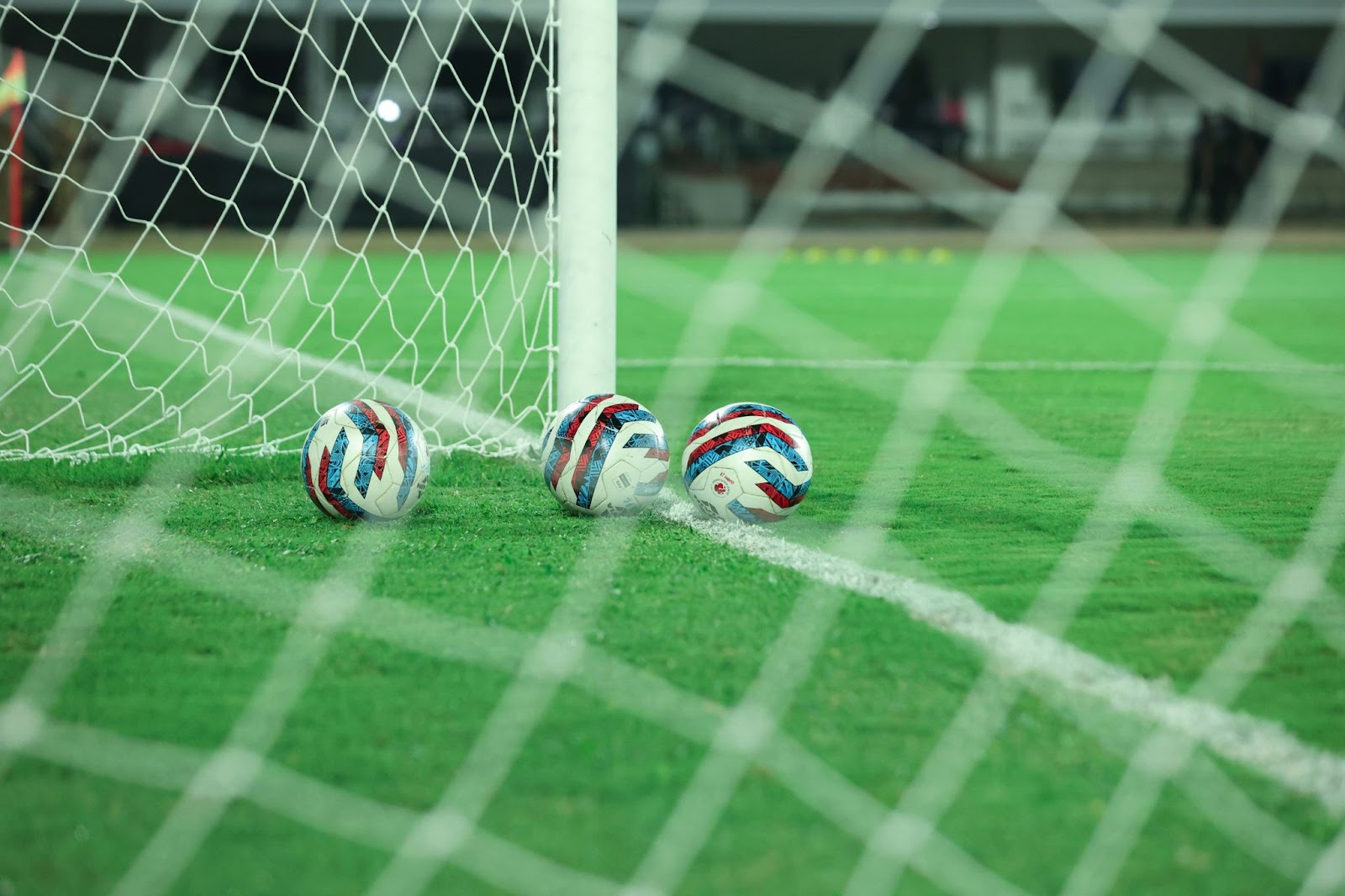
How the game begins and what matters
Kick-off: How the game begins
A football match begins with a kickoff in the center of the pitch. At the start of each match, after each goal, and at the beginning of the second half, play restarts with a kickoff. The ball must be played forward by the player taking the kickoff, and all opposing players must remain outside the center circle until the ball is played.
Special features at kickoff:
- The ball must be clearly moving forward.
- A goal can be scored directly after a kickoff.
The kick-off marks the official start of the game, and it is important that both teams are lined up according to the rules at this time.
Playing time and breaks: Regular playing time and added time
A football match typically lasts 90 minutes, divided into two 45-minute halves. There is a 15-minute break between halves to give the players time to recover.
Added time is determined by the referee to compensate for time lost due to injuries, substitutions, or other delays. This extra time is displayed at the end of each half and can be crucial to the outcome of the match.
Extra time and penalty shootout
In tournament matches where a winner must be determined, extra time and ultimately a penalty shootout may occur after regular playing time and extra time. Extra time consists of two further 15-minute halves, and if there is still no winner after these 30 minutes, a penalty shootout follows.
The penalty shootout:
- Each team consists of five shooters.
- If both teams are tied after the five shots, the game goes into sudden death until one team scores the decisive hit.
The 15 most important football rules in detail
Offside rule: Simple explanation with examples
The offside rule is one of the most complex football rules and is a constant source of debate. A player is offside if he is closer to the opponent's goal line than the ball and the second-to-last defender at the moment the ball is played to him.
An example:
- A striker is standing behind the defenders when the ball is passed to him – that is offside.
- However, if he is level with the second-to-last defender or behind the ball, he is not offside.
Important: A player can only be offside if he is actively participating in the play. There is no offside rule during a throw-in, corner kick, or goal kick.
Handball: When is it allowed and when is it not?
Handball is another controversial aspect of football. Generally, it is forbidden to deliberately play the ball with the hand or arm. The exception is the goalkeeper, who is allowed to use his hands within his own penalty area.
A deliberate handball is called when:
- The arm is unnaturally spread away from the body.
- The player consciously moves his hand/arm towards the ball.
Unintentional handball, for example during close defensive actions or when the ball bounces from one's own body to the arm, is usually not penalized.
Free kicks and penalty kicks: Differences and execution
There are two types of free kicks: indirect free kicks and direct free kicks.
- Indirect free kick: The ball must not be kicked directly into the goal, but must first touch a second player.
- Direct free kick: The player can shoot the ball directly at the goal.
A penalty kick is awarded for serious offenses within the penalty area, such as a foul or handball. The ball is placed on the penalty spot, and the kicker steps up against the goalkeeper, who may only move on the goal line until the ball is kicked.
Corner kicks and throw-ins: Football rules and common mistakes
-
Corner kick: When is a corner kick awarded in football? A corner kick is awarded when the ball is last played over the goal line by a player of the defending team. The corner kick is taken from the corner of the pitch. A direct goal can be scored from a corner kick.
Common mistakes during corner kicks:- The player crosses the quarter-circle mark when shooting.
- Players from the defending team are standing too close to the execution point (they must maintain a distance of 9.15 meters).
-
Throw-in: A throw-in is awarded when the ball completely crosses the touchline. The player taking the throw-in must have both feet on or behind the touchline and throw the ball over their head with both hands behind their head.
Common throw-in errors:- The player lifts one foot during the throw.
- The ball is not passed over the head.
Understanding the basic rules of football is crucial for enjoying and participating in the game. Whether it's the kickoff, offside, free kicks, or penalty shootouts – every detail contributes to the dynamics of the game. With this handbook, you'll be perfectly equipped to understand the sport in all its depth and enjoy it even more.
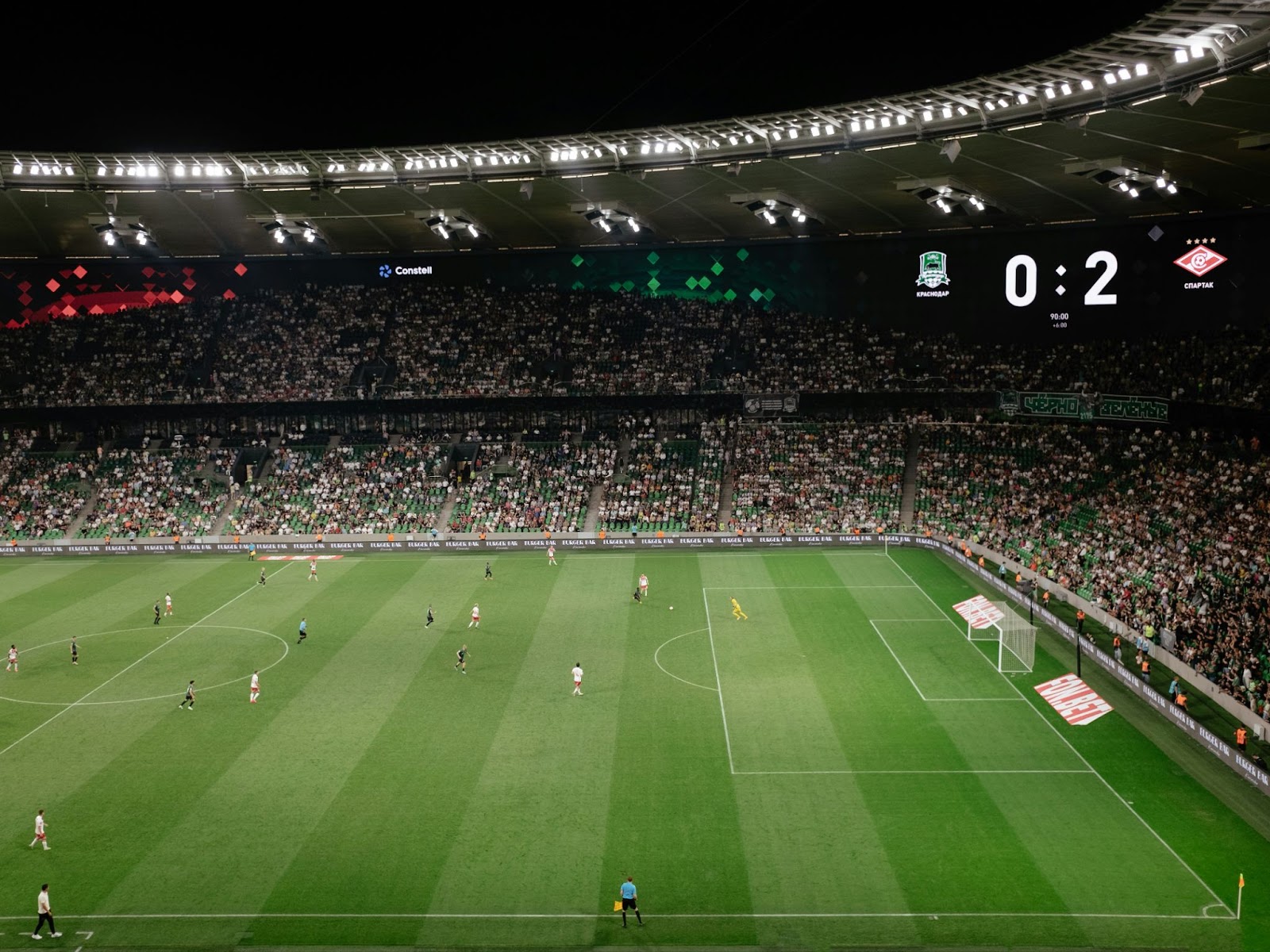
Regulations for violations and penalties
Yellow, red and blue cards: When and why they are issued
In football, there are three main cards used as disciplinary measures:
- Yellow card: It is awarded for offenses such as unsportsmanlike conduct, repeated rule violations, or preventing a promising attack through a tactical foul. A player who receives a yellow card may continue playing but must be careful, as a second yellow card automatically results in a red card.
- Red card: This card means immediate expulsion. A player receives a red card for serious foul play, violent conduct, serious unsportsmanlike behavior, or if they have already received a second yellow card. The player must leave the field, and their team plays with ten men for the remainder of the match.
- Blue card (in some amateur and indoor football tournaments): This card results in a temporary suspension. The player must leave the field for a certain period of time but may then rejoin the game. The blue card is used for moderate offenses that are more serious than a yellow card but not as serious as a red card.
Indirect and direct free kicks: differences and application
Free kicks are awarded when a team breaks the rules. There are two types of free kicks:
- Indirect free kick: An indirect free kick cannot be kicked directly into the goal. The ball must touch at least one other player before a goal can be scored. Indirect free kicks are awarded for less serious infringements, such as dangerous play without contact with an opponent or a back pass to the goalkeeper that the goalkeeper catches with their hands.
- Direct free kick: A direct free kick can be taken directly at the goal without the ball touching another player. It is awarded for more serious infringements such as fouls, handball, or rough play. If such an infringement occurs inside the penalty area, it results in a penalty kick.
Special game situations
Dealing with injuries: What happens if the game is interrupted?
Injuries are a common part of the game. If a player is injured, the referee can stop the game so that medical personnel can come onto the field. Important rules for dealing with injuries:
- The referee decides whether the game must be stopped immediately, especially in the case of head injuries or obvious serious injuries.
- In the case of minor injuries, the game is usually continued, and the player is treated off the field.
- The game is restarted with a referee's ball if it was interrupted due to an injury without a foul having occurred.
Video evidence: When and how it is used
Video Assistant Referee (VAR) is a relatively new addition to football that helps correct serious refereeing errors. VAR intervenes only in four specific situations:
- Goals: When there is doubt as to whether a goal was scored correctly (e.g. offside, foul in the lead-up).
- Penalty decisions: Checking whether a foul actually occurred in the penalty area or not.
- Red cards: For clear and unjust decisions regarding sending-offs.
- Player mix-up: When the referee shows a card to the wrong player.
The referee can either directly adopt the VAR's decision or review the incident himself on a monitor at the side of the pitch. The final decision always rests with the referee on the field.
Storms and other unforeseen events: game interruption and resumption
In the event of unforeseen circumstances such as heavy rain, storms, lightning strikes, or technical problems, the referee can interrupt or completely abandon the game. The rules for this are clear:
- Game interruption: If conditions permit, the game will resume after a short break. In case of rain or storm, the teams will wait in the changing rooms until the referee decides whether it is safe to continue.
- Match abandonment: If the match can no longer be continued, the referee decides to abandon it. This can also happen if the safety of the players or spectators cannot be guaranteed. In such cases, the match is either rescheduled or, in certain competitions, continued at a later date.
Infringements and penalties in football are clearly defined, and the referee plays a central role in enforcing these rules. Special game situations, such as injuries or the use of video assistant referee (VAR), make the game fairer and safer. Unforeseen events, such as extreme weather conditions, can also influence the course of a match. Understanding these rules and procedures allows fans and players to fully appreciate and understand the game.

Role of the referee and his assistants
Responsibility and decision-making authority
The referee is the guardian of the rules and bears full responsibility for ensuring that the game is played fairly and according to the rules. His main tasks include:
- Monitoring compliance with the rules in football: The referee whistles for violations, issues penalties such as yellow and red cards, and ensures that all players treat each other safely and respectfully.
- Management of game interruptions: The referee decides when the game is interrupted due to fouls, injuries, or unforeseen events.
- Decision on goals and continuation of the game: He determines whether a goal is valid, when the game is restarted and how stoppage time is structured.
- Enforcement of fairness: Through his presence on the field, the referee prevents unsportsmanlike conduct and ensures that the game remains in an orderly manner.
The referee has the highest decision-making authority throughout the entire match and can make his decisions after consulting with the assistant referees or the VAR (Video Assistant Referee). However, his decision is ultimately final.
Use of assistants and video replays
The referee has several assistants to support him:
- Assistant referees (linesmen): They stand on the touchlines and monitor offsides, throw-ins, and when the ball crosses the touchlines. They carry a flag to signal their observations to the referee.
- Fourth official: He assists with administrative tasks, such as monitoring substitutions and added time. The fourth official is in constant contact with the referee and helps to facilitate match management.
- Video Assistant Referee (VAR): The VAR is consulted in crucial game situations to correct potential refereeing errors. The four main areas of application for VAR are goals, penalties, direct red cards, and cases of mistaken identity.
The assistants and the VAR support the referee, but the head referee remains the authority on the field and makes the final decisions.
Extended and tactical rules
Duties of the captain and the coach
The captain has a special role within the team and represents his team on the field. His main tasks are:
- Communication with the referee: The captain is often the only player officially allowed to speak to the referee about decisions in order to prevent escalations.
- Leadership and motivation: The captain takes on a leadership role on the field, motivates his teammates and ensures cohesion, especially in difficult phases of the game.
- Responsibility for the choice: He is responsible for the choice during the coin toss at the start of the game or during penalty shootouts after extra time.
The coach plays a crucial tactical role and is responsible for the strategic direction of the team:
- Formation and tactics: The coach decides which formation will be played (e.g., 4-4-2, 3-5-2) and what the game strategy will be. These decisions can significantly influence the course of the game, as they are based on the strengths and weaknesses of both the team and the opponent.
- Substitutions and tactical adjustments: The coach is responsible for player substitutions and adapts the tactics during the game. He decides when offensive or defensive changes are necessary to react to the course of the game.
However, the coach can only make limited interventions during the game, as he must adhere to the rules regarding substitutions and interruptions.
Strategies and tactics under the influence of the rules
The rules of football influence the tactical decisions of teams in many ways. Some examples:
- Offside trap: The offside rule is not just a defensive tool, but also a strategic weapon. Many teams deliberately employ the offside trap, in which defenders push forward in a line to catch the opposing striker offside.
- High-intensity play and fouls: Tactical fouls, especially in midfield, are often used to stop dangerous attacks. Players deliberately risk yellow cards to slow down or halt the opponent's play.
- Set pieces: Free kicks, corners, and throw-ins offer excellent tactical opportunities. Teams practice specific plays for set pieces to convert these chances into goals. Corners are often combined with pre-rehearsed runs to create confusion in the opposing defense.
- Possession strategy and tempo: Coaches often decide whether their team should maintain possession or quickly attack. This tactical approach depends heavily on the rules of the game, particularly the playing time and the possibilities of stoppage time.
The referee and his assistants are the crucial guarantors of fairness and adherence to the rules in football. Their decisions significantly influence the course of the game. Captains and coaches also have important roles, both organizational and tactical. While adhering to the rules, teams employ strategic tactics to influence the game and maximize their chances of victory.

History and development of the rules of football
The rules of football, as we know them today, have evolved over many years. Originally, football was a chaotic game with few clear regulations. But over time, the rules were standardized to ensure fairness and a level playing field.
How the rules have evolved over time
- Origins in the 19th century: The first documented football matches resembled a wild street fight more than the football we know today. Different schools and clubs had their own sets of rules. To create uniformity, the English Football Association was founded in 1863, which established the first official rules of football – known as the "Laws of the Game".
- Prohibition of handball: A key difference between football and other ball games, such as rugby, was the prohibition of handball (except by the goalkeeper). This rule clearly separated modern football from other sports.
- Introduction of the offside rule: The offside rule arose from the need to keep the game fair by preventing players from simply "waiting in front of the goal" to score easy goals. This rule has been amended and refined several times to reflect the dynamic nature of the game.
Important milestones in the history of the rules
- 1871: Introduction of the goalkeeper: The position of the goalkeeper, who is the only player allowed to touch the ball with his hands, was officially included in the rules.
- 1891: Penalty kick: The penalty kick was introduced to punish serious fouls in the penalty area and thus promote fair play. Initially, however, the penalty kick did not have the same significance as it does today and only gradually became a decisive part of the game.
- 1925: Change to the offside rule: Originally, a player had to have three defenders between him and the goal to be considered offside. This rule was reduced to two defenders, which made the game more offensive and faster.
- 1966: Introduction of cards (yellow and red): The card system was first introduced at the 1970 World Cup following a trial run at the 1966 World Cup. Yellow cards serve as a warning, red cards as a sending-off – a measure that made the game fairer and more disciplined.
- 1992: Back-pass rule: Goalkeepers have since been prohibited from deliberately picking up back passes with their hands. This rule change aimed to make the game faster and more offensive, and to avoid time-consuming actions.
- 2018: Introduction of VAR: Video evidence revolutionized the game by reviewing crucial situations such as goals, penalties, and red cards, helping referees correct incorrect decisions. VAR has ensured greater fairness in the game ever since.
Conclusion
The rules of football have a rich history and are the foundation of the game as we know and love it today. They were developed to promote fairness, safety, and the dynamic nature of the game. From kick-off to the offside rule, from free kicks to video evidence – every rule has its place and its significance.
For players, coaches, and fans, understanding the rules is crucial to fully enjoying the game. Actively learning the basic rules of football not only helps to better understand contentious situations but also allows for a more strategic and tactical approach to the game. The evolution of the rules of football demonstrates that the sport is constantly changing and adapting to become fairer and more exciting.
With this comprehensive handbook, you now have the tools to become not just a spectator, but a true expert on the game!
How does one become a professional footballer?
Best exercises for speed and agility
Related Posts

Injuries in football: understanding, treating and preventing

The Best Ideas to Please a Football Fan

PSG Champions of Europe 2025: A Historic Victory and a Lesson in Discipline

Football conditioning training: a comprehensive handbook

Best exercises for speed and agility

How does one become a professional footballer?


